Giving AI a real memory,
and finding out that more context can make it worse.
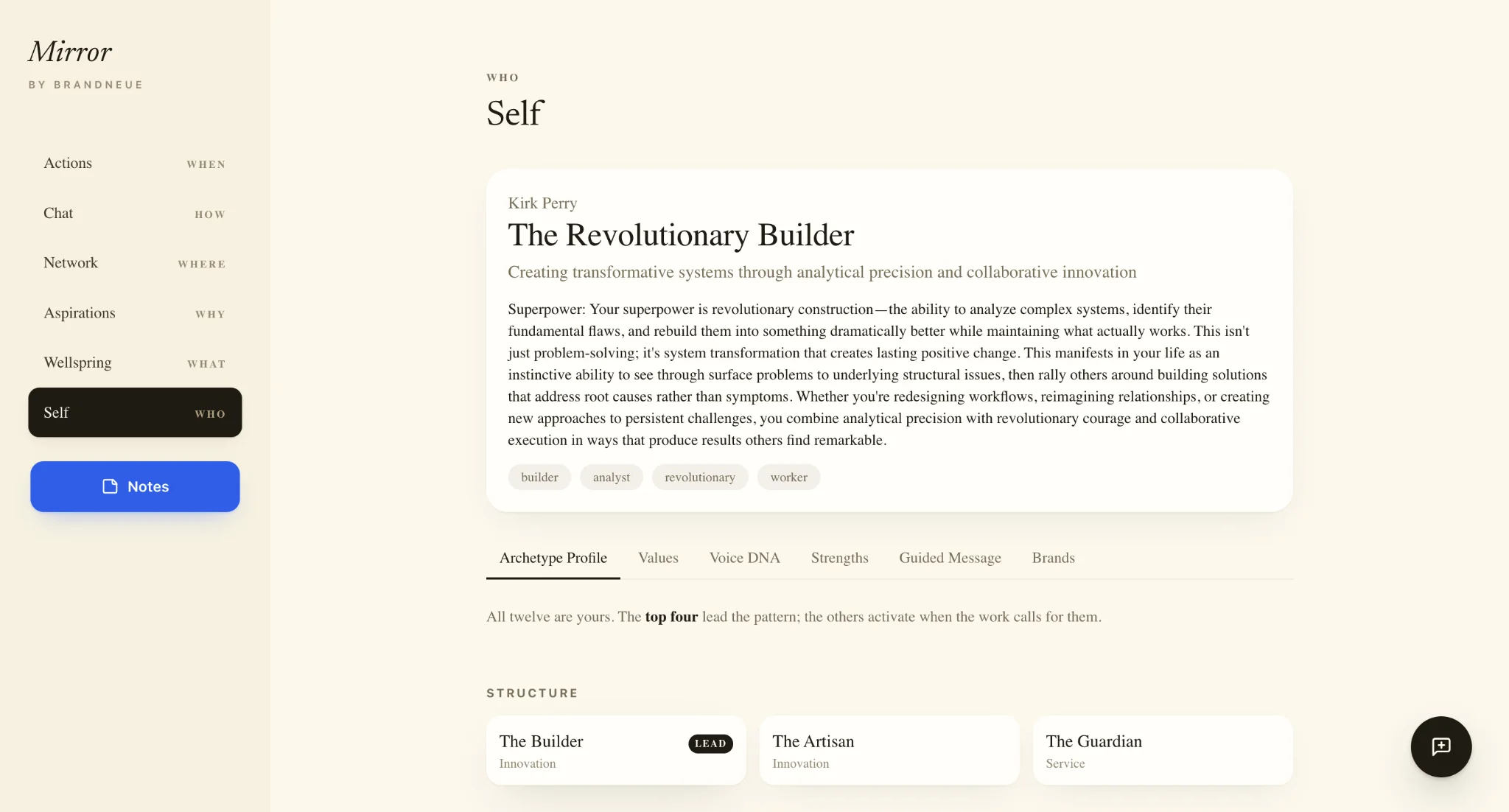
Mirror is context infrastructure: a structured, curated source of truth about a person and their work, goals, values, voice, relationships and current focus. I built it over six weeks, then used the system to test a question most AI implementations quietly assume they already know the answer to: does more context actually improve the output?
AI does not know the business unless someone builds the picture.
Most AI systems start from almost nothing. Strategy lives in one document, customer nuance lives in someone's head, project context lives somewhere else, and every new session reconstructs the picture again.
The deeper risk begins when AI is allowed to write back into that picture. A fluent but subtly wrong summary can become source data, and every downstream model call can inherit the error without anyone noticing that the foundation changed.
Treat context as governed data.
Not an ever-growing prompt.
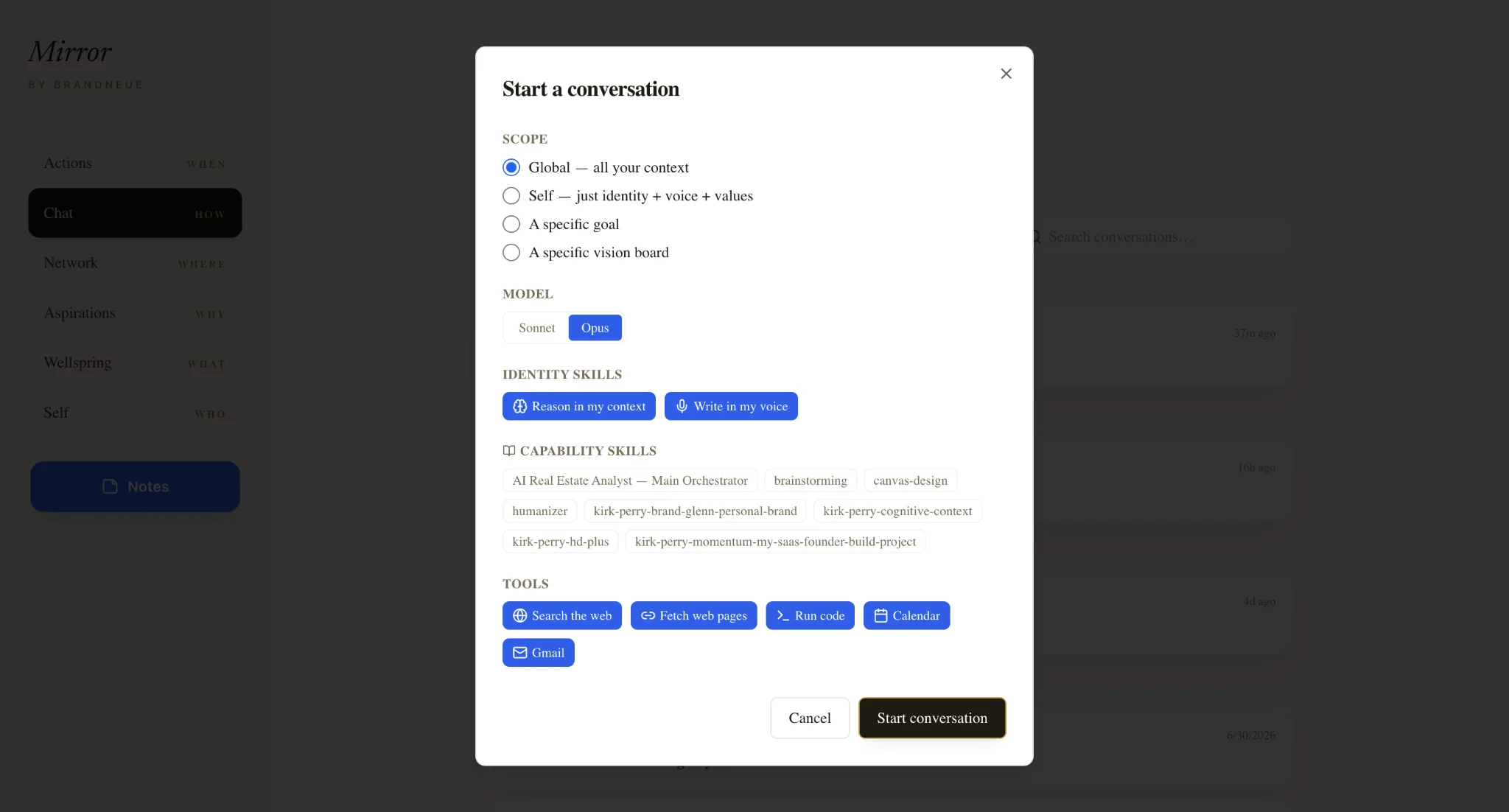
The first thing I built was not chat. It was a read-only context assembler that could show exactly what an AI would receive: identity, voice, values, current focus, supporting resources and relevant people.
Two rules followed. AI never writes into the source of truth unattended. And context is shaped to the job rather than accumulated indiscriminately.
More context helped twice.
And hurt twice.
The point was not to prove a position. It was to measure what actually happened.
Adding user-written material strengthened the output and exposed that the prior prompt had been narrating empty fields back to paying users.
The added material displaced the more specific user context the generator actually depended on.
A saved external link was summarized as if the user were personally working on ideas the article merely mentioned.
It did not beat baseline with the model held constant, so it shipped turned off rather than being justified after the fact.
AI can propose changes.
It cannot silently become the truth.
The obvious path: let the model enrich goals, resources, tasks and other context directly. It is faster and demos beautifully.
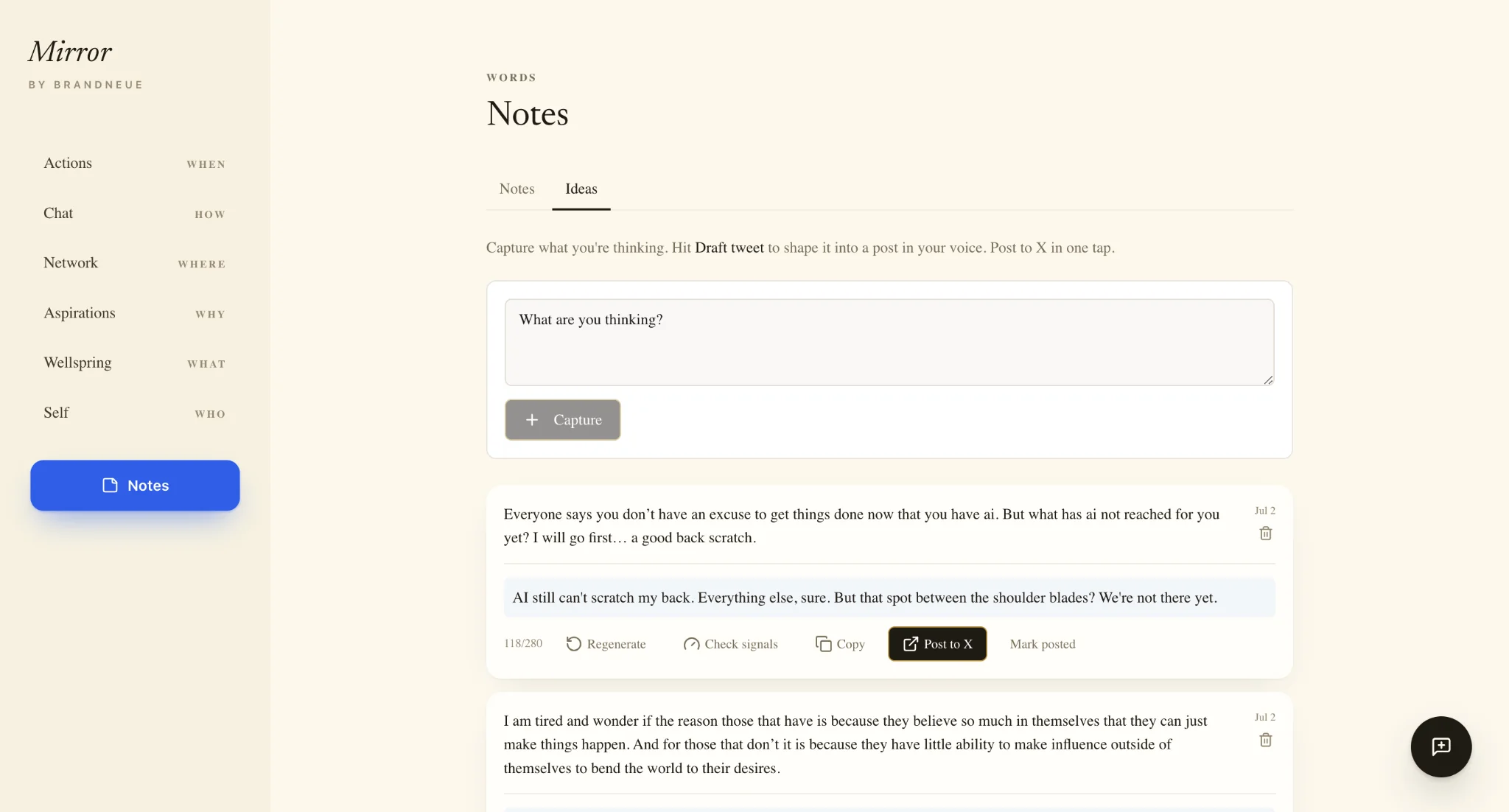
What I chose instead: every AI write becomes a field-level draft with provenance and a status lifecycle. A person accepts, edits or rejects it before anything commits.
Why: an error inside a source of truth compounds. The review step is the cost of keeping the context trustworthy enough to use later.
A context layer, an agent layer and the governance between them.
Substrate
Goals, tasks, resources, values, notes, CRM, habits, relationships and the links that make them meaningful together.
Context assembler
Four job-specific scopes rather than one giant context dump, with token estimates and gap warnings visible before a model call.
Review-gated writes
Field-level drafts with provenance across goals, vision boards, tasks, resources and agent work products.
Agent + tools
An AI agent with persistent task memory, skills, web, code, calendar and email tools.
Cost design
Small models for cheap work, larger models only when stakes justify them, and pure SQL when no model is needed.
Design + accessibility
A tokenized interface system, AA contrast, focus states, tap-target fixes and more than 100 catalogued UX improvements.
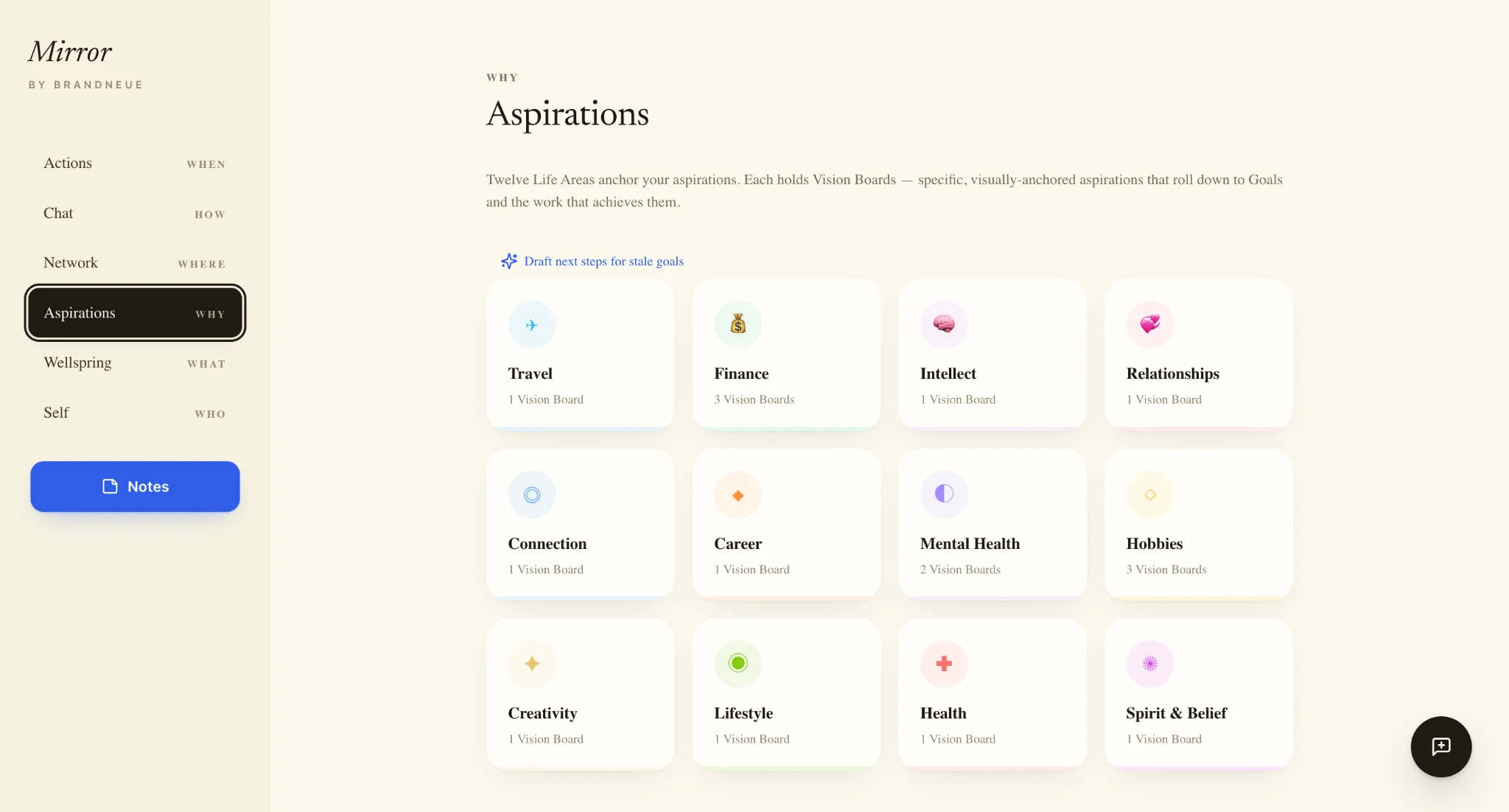

The context is usable because it stays connected to the thing it represents.
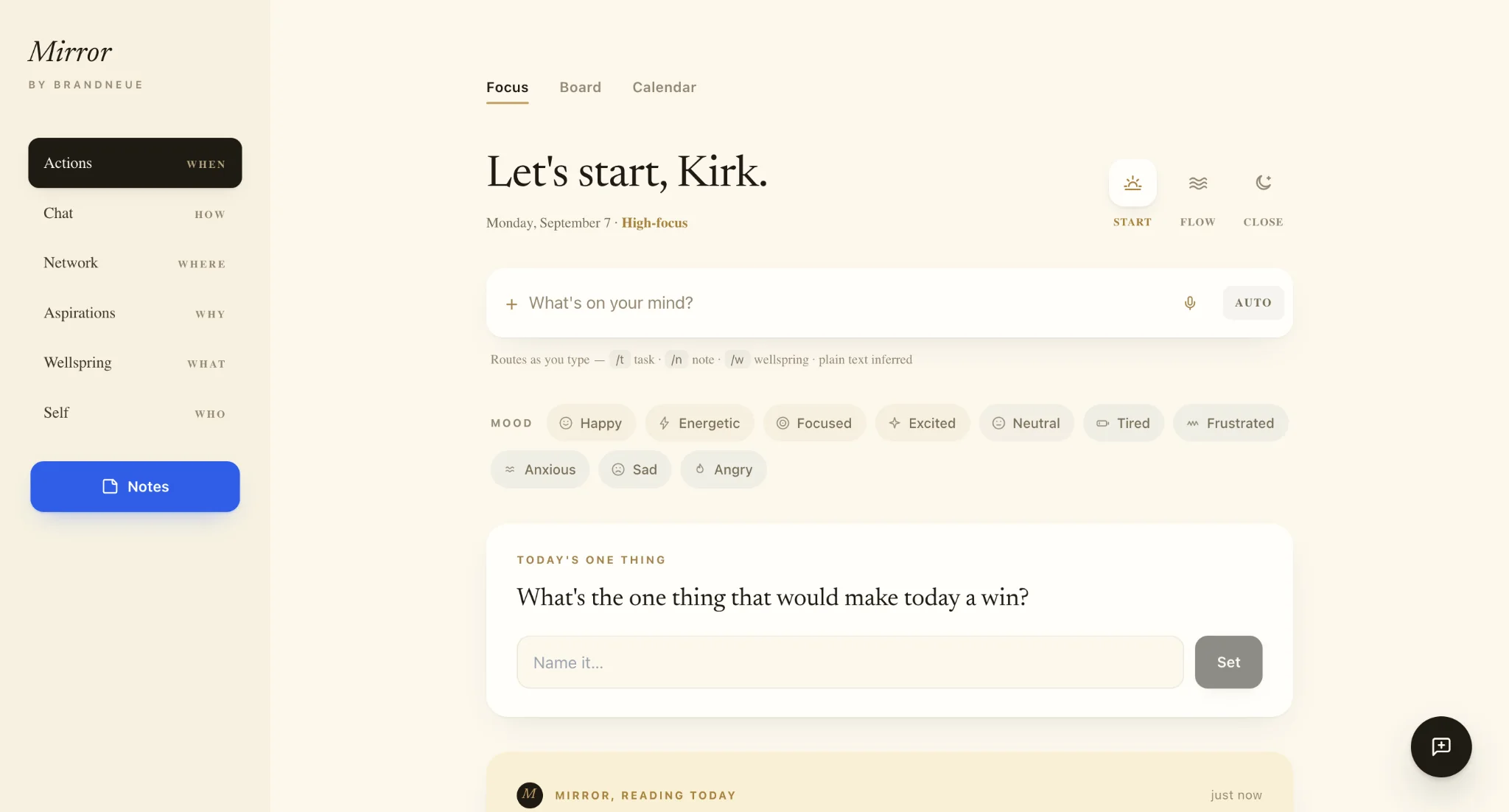
Aspiration is not stored as a loose paragraph. A vision board can carry intention, tags, people and goals, and that exact object can become the scoped context for a conversation.
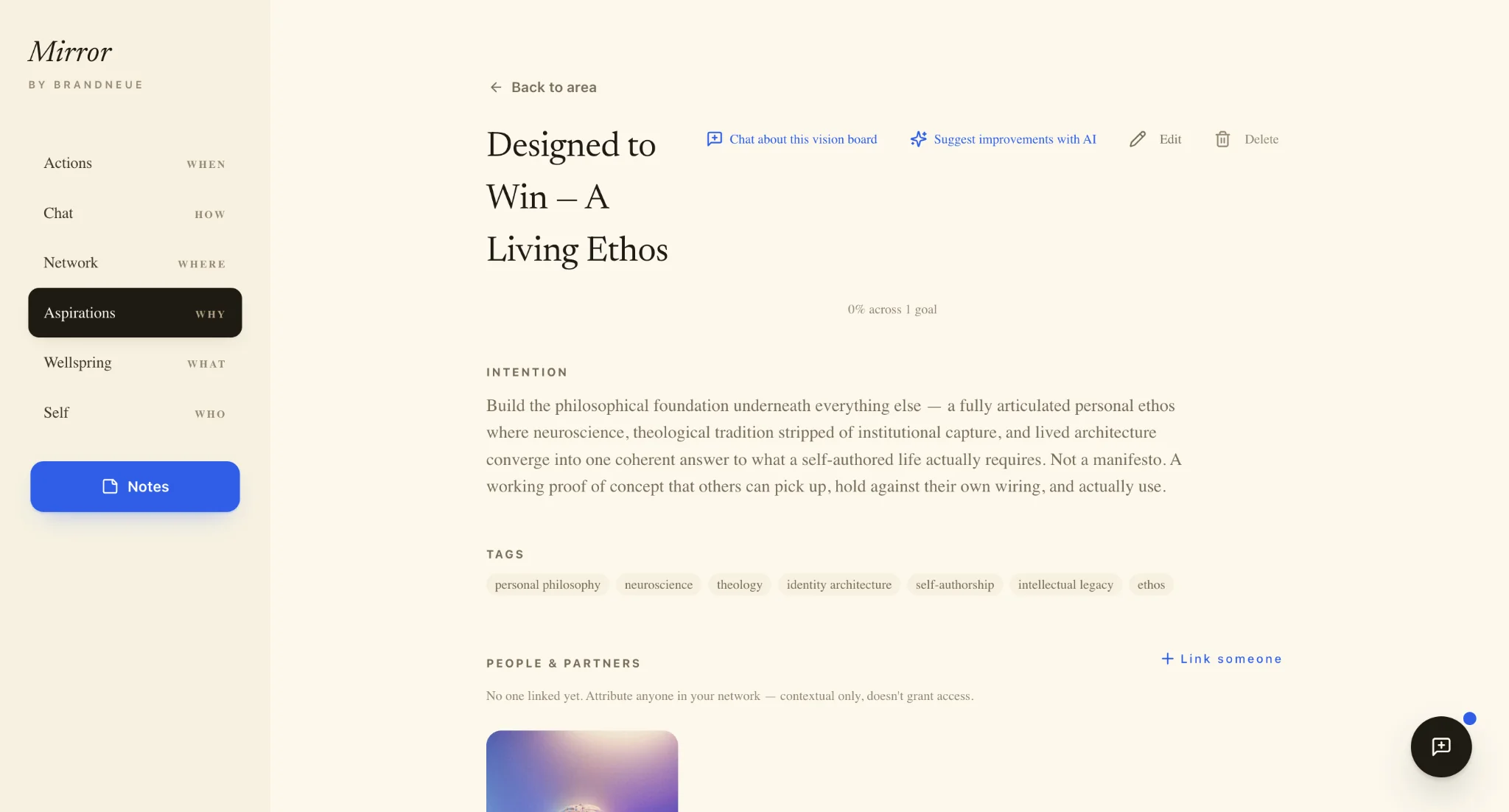
The durable output was a governance rule.
Mirror created a structured, queryable context layer where scattered knowledge had existed before. But the more important output was the rule that now governs AI changes across the codebase: prompt construction changes have to prove themselves against real data rather than being assumed safe because they are additive.
The finished cognitive-context feature is evidence that the rule has teeth. It failed to show a clear improvement, so it stayed off. A separate module was also removed after two attempts failed to make it earn a distinct role.
Before pointing AI at the company, decide what it is allowed to know and change.
The useful question is not simply which model to use. It is what structured knowledge should exist, which parts belong in this specific task, and whether AI is allowed to alter the foundation future work will rely on.
That is the same discipline I bring to client systems: measure the addition, narrow the context when necessary, and turn something off when the evidence says it did not help.