Three days.
One complete category campaign.
The Invisible Practice started with a business need, not a website brief: establish authority in a crowded mental-health market and turn that authority into qualified conversations. The complete system was produced in three days using an AI-native workflow. For client work, I would scope comparable effort as roughly a focused two-week sprint to allow for onboarding, review and approvals.
INVISIBLE
PRACTICE

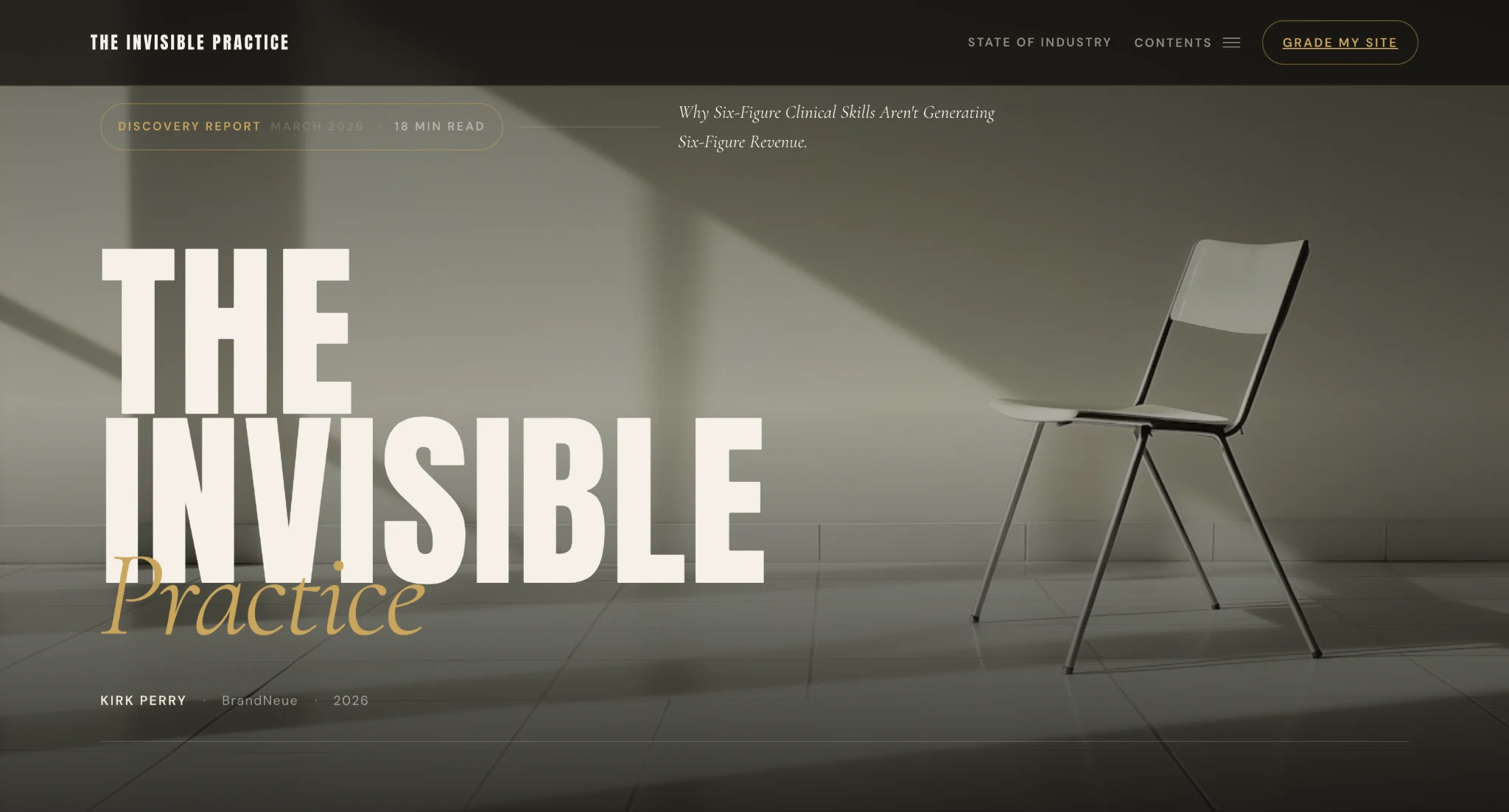
Establish authority in a category where everyone sounds the same.
Independent therapy practices are competing against large platforms while often using the same generic language, the same offers and the same visual conventions.
The question was not, “What should this website look like?” It was, “How do we create a point of view strong enough to earn attention and turn it into a useful commercial system?”
Do not make the claim.
Measure the market.
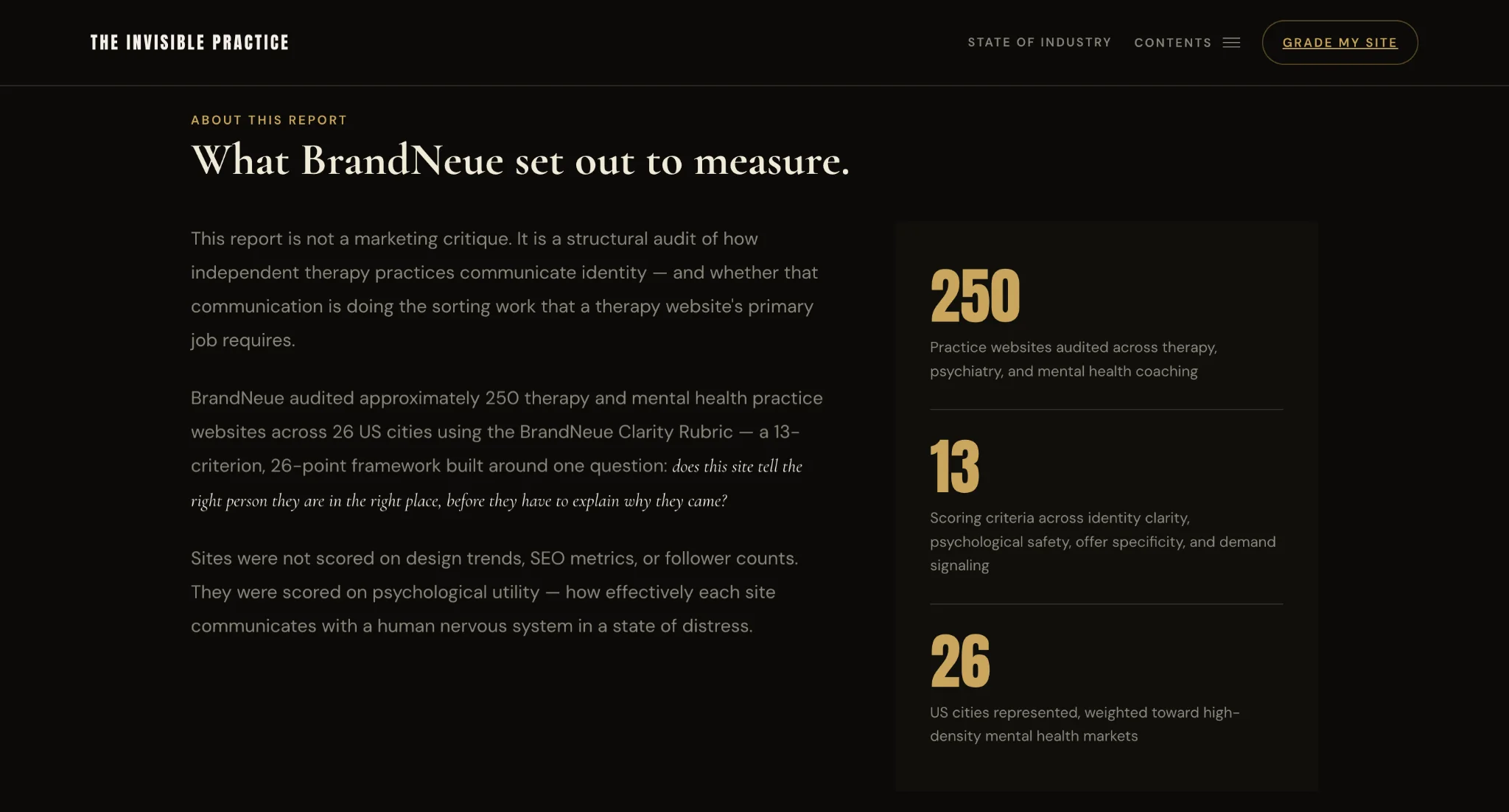
Before writing the category argument, I built the evidence underneath it. BrandNeue audited approximately 250 therapy and mental-health practice websites across 26 U.S. cities using a 13-criterion, 26-point clarity rubric.
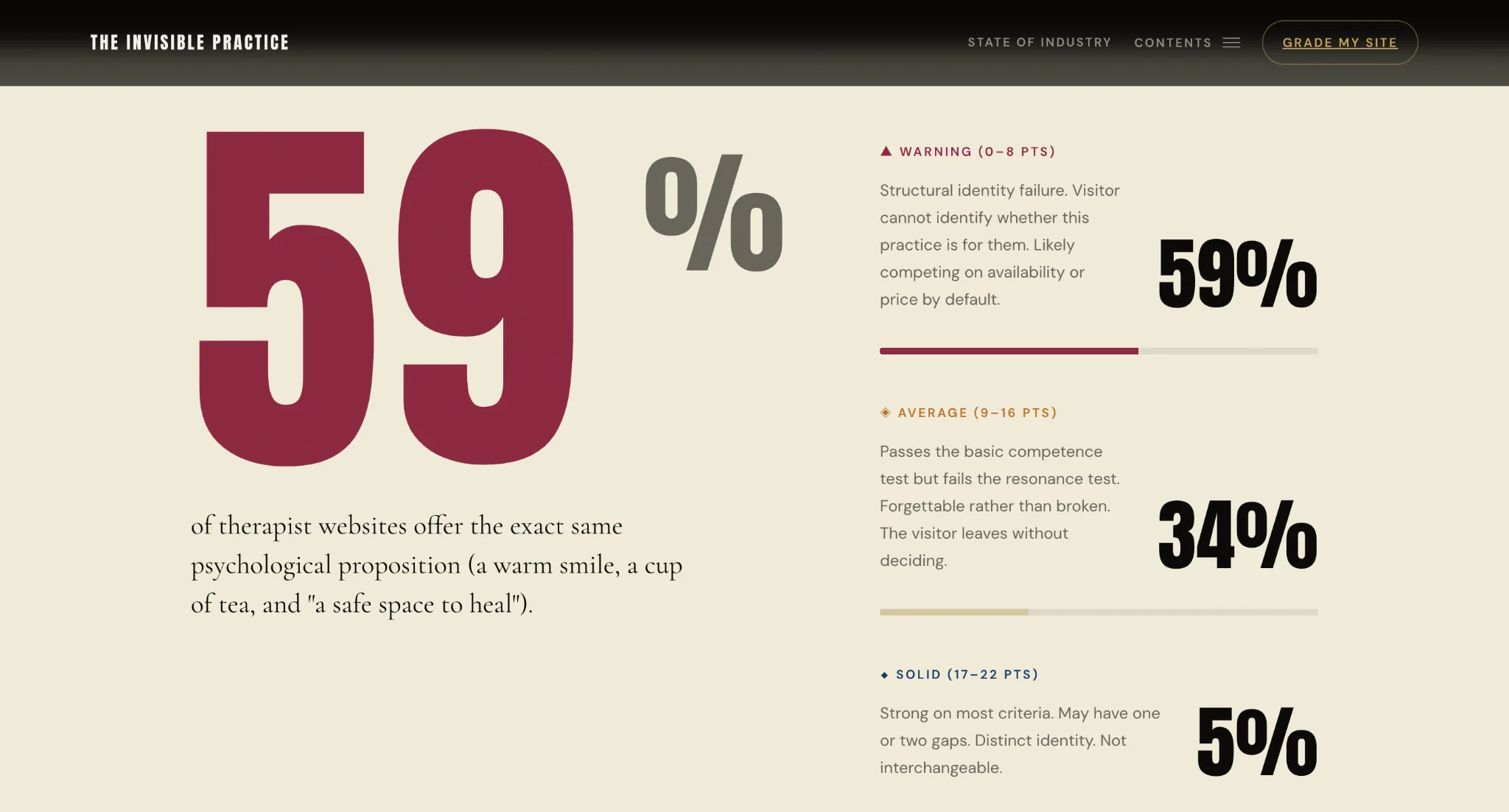
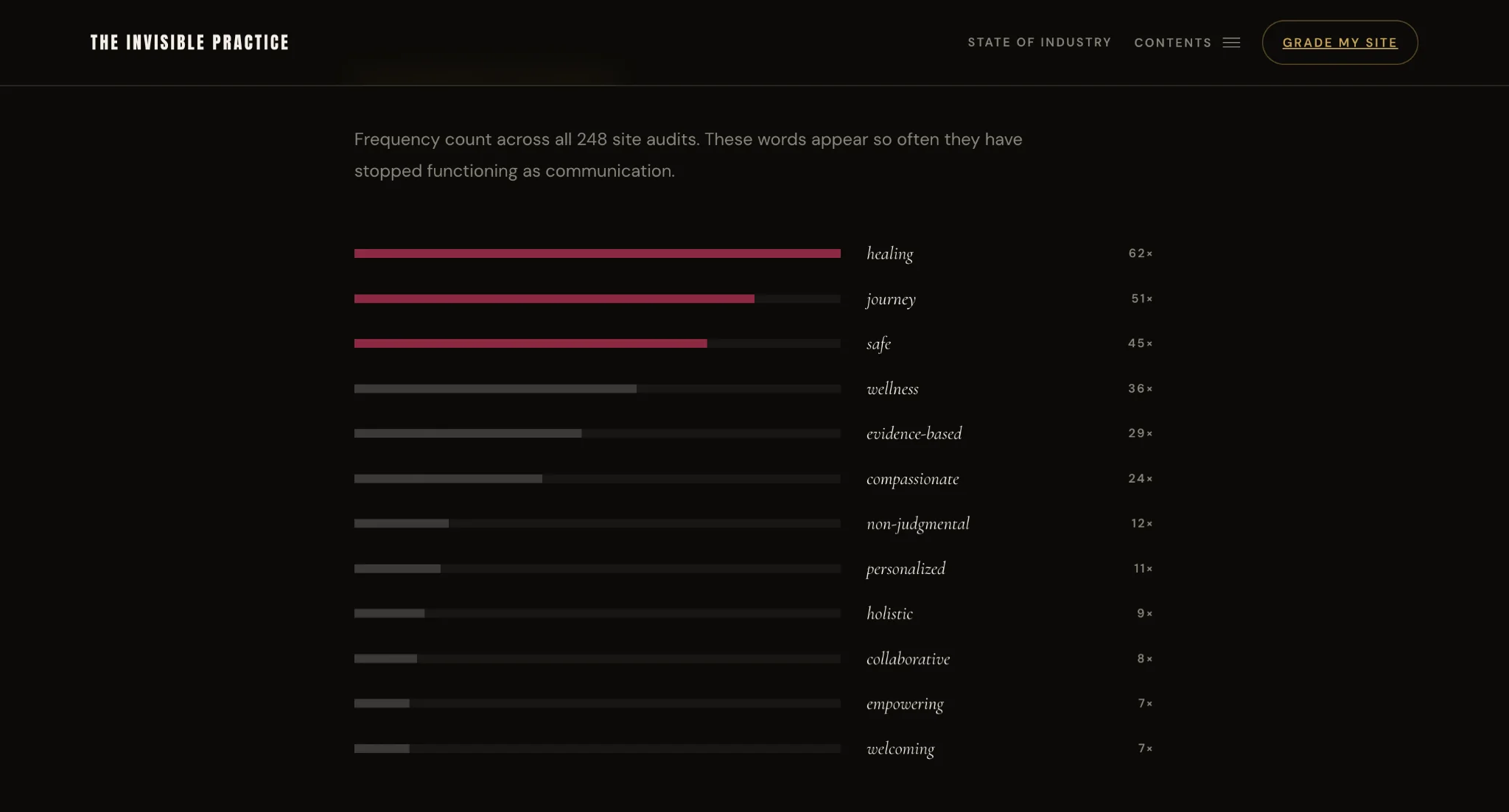
The market was not suffering from a lack of competence. It was suffering from interchangeability.
The research turned a branding opinion into an observable category problem.
It would have been easy to scope this as a website.
The business need required more than a website, so the build expanded across every layer needed to create authority, discovery, interaction and conversion.
Research system
A 13-criterion rubric and market audit across approximately 250 practice websites.
Category report
An 18-minute flagship report turning the data into a strategic point of view.
Editorial system
Data storytelling, frameworks, visual language and a repeatable publication format.
Diagnostic product
A “Grade My Site” path that lets the reader turn the research back onto their own practice.
Content engine
Twenty field reports organized across differentiation, websites, growth, group practices and AI voice.
Conversion system
Research and content lead toward a diagnostic conversation instead of ending at a generic contact form.
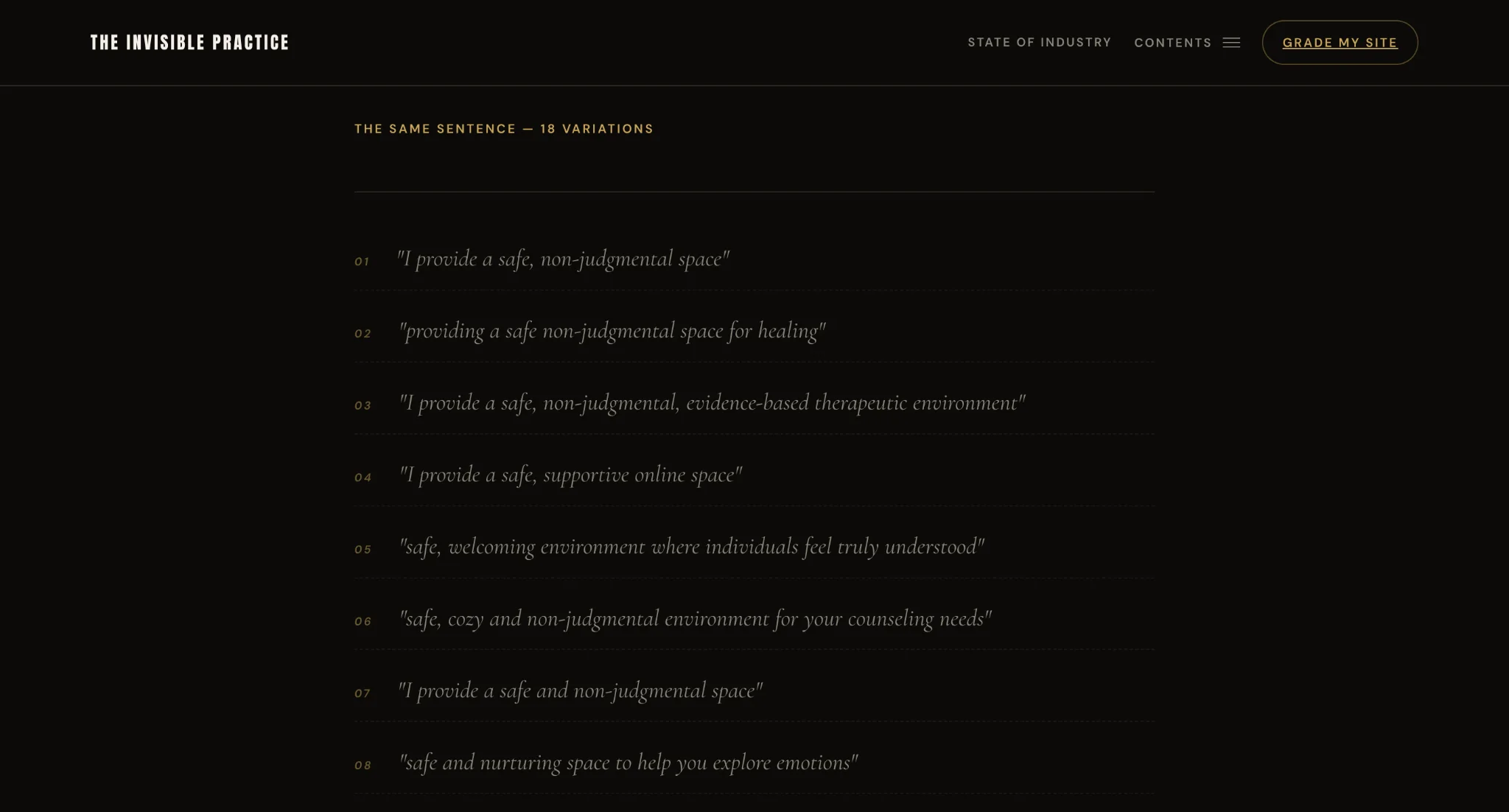
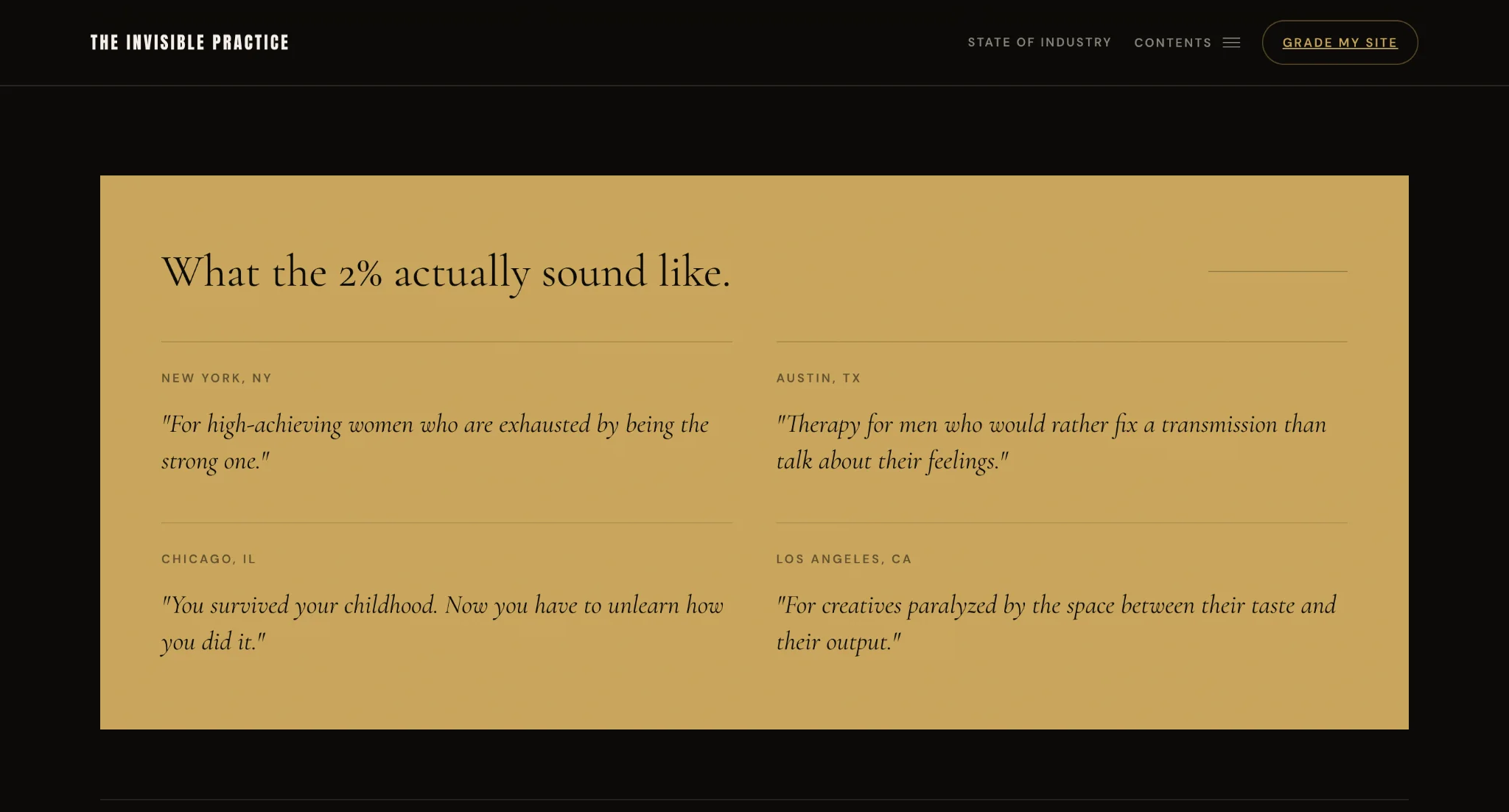
Research became the engine for everything after it.
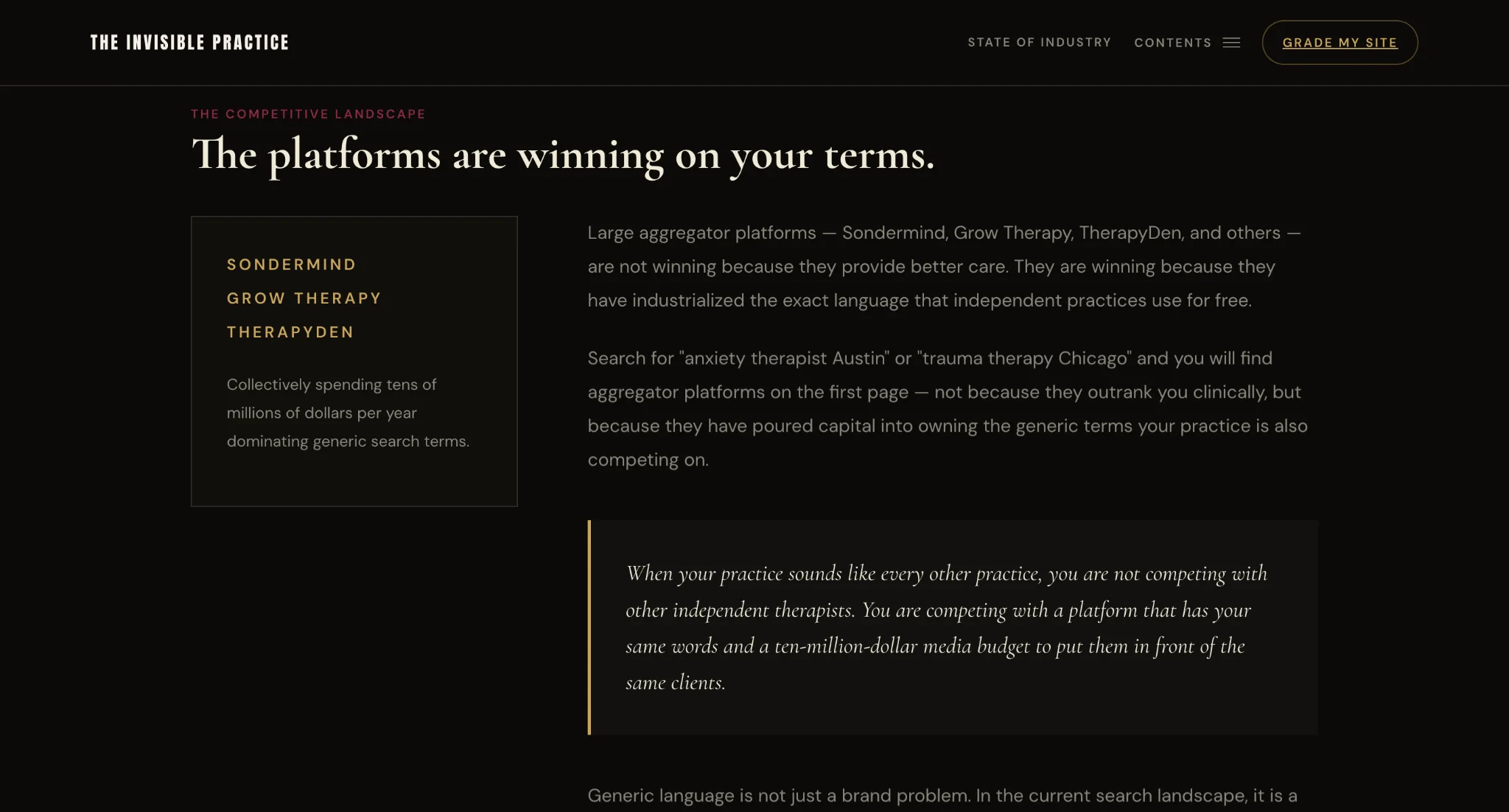
AI compressed production. It did not decide what deserved to exist.
The leverage came from using AI across research processing, analysis, writing, iteration, code and production in parallel. The human work remained the problem framing, research standard, strategic thesis, information architecture, creative direction and final judgment.
That distinction matters. The advantage is not producing the same website faster. It is being able to solve the whole business need instead of stopping where one discipline traditionally ends.
A three-day internal build becomes roughly a two-week client sprint.
Internal work can move at extreme speed because the strategy, approvals and context all live with one person. Client work needs space for onboarding, access, feedback, decision-making and sign-off.
So this is not a promise that every comparable engagement ships in three days. It is proof of the production leverage underneath a focused two-week sprint.
A live authority system, not a brochure site.
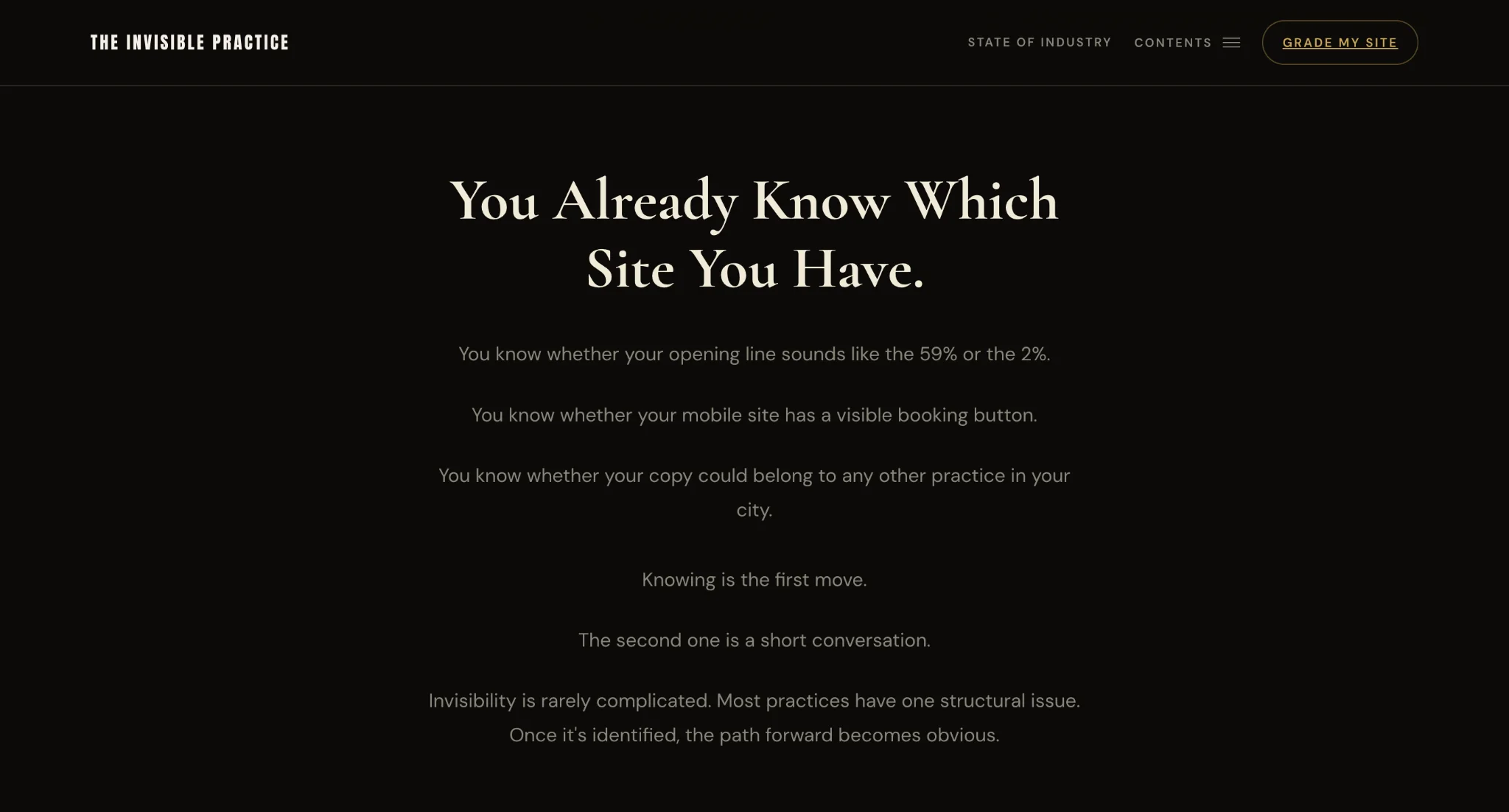
“Bring the need” only works if the work can cross disciplines.
A client should not have to know they need a research rubric, category report, content system, interactive diagnostic and conversion architecture before they ask for help.
They should be able to say, “We need credibility in this market and more qualified conversations.” The job is figuring out the system that makes that outcome more likely, then getting it shipped.